THIRDREALITY Zigbee Motion Sensors Compared: Which One Belongs in Each Room?
Specs below are quoted from each Amazon listing. Scores are out of 10, based on listed specifications and buyer feedback. Nothing on this page was handled or measured by us.
As Amazon Associates, we earn from qualifying purchases. This means we may receive a small commission at no extra cost to you if you click through and make a purchase.
Choosing the right THIRDREALITY Zigbee Motion Sensor comes down to matching detection hardware with room dynamics and automation targets. Standard passive infrared detectors work well for hallways, staircases, and rapid walk-through spaces where sudden body heat shifts trigger instant lighting routines. However, complex spaces like home offices, entertainment areas, or bedrooms demand continuous human presence tracking or adjustable beam thresholds to avoid false alerts and unexpected darkness. THIRDREALITY builds motion detection hardware designed specifically for local Zigbee networks, relying on standard protocols to communicate directly with compatible smart hubs without forcing proprietary cloud dependencies.
This guide breaks down exactly 6 models across THIRDREALITY’s smart sensor catalog to help you map the right hardware to every room. The lineup ranges from classic battery-powered passive infrared sensors available in single units, two-packs, and four-packs, up to the hardware-adjustable R1 detector, the mains-powered multi-function night light repeater, and the continuous 60GHz millimeter-wave R3 presence sensor. While each model communicates across standard Zigbee mesh protocols, they differ substantially in sensing range, power architecture, physical adjustability, and room role.
Which THIRDREALITY Zigbee Motion Sensors Should You Buy

Best for: Drafty rooms needing customized detection boundaries
Pros
- Hardware push buttons adjust detection distance
- Unaffected by ambient heat or sunlight
- Extended reach up to 10 meters
Cons
- One-year battery life on AA cells

Best for: Single closet or pantry motion triggers
Pros
- Compact lightweight 1.83-ounce housing
- Includes two AAA alkaline batteries
- Broad hub compatibility with Home Assistant
Cons
- Only covers one isolated location

Best for: Equipping multiple rooms across a whole home
Pros
- Four sensors with AAA batteries included
- Two-year rated operational battery life
- Pet-friendly indoor optical detection
Cons
- Cannot track stationary occupants
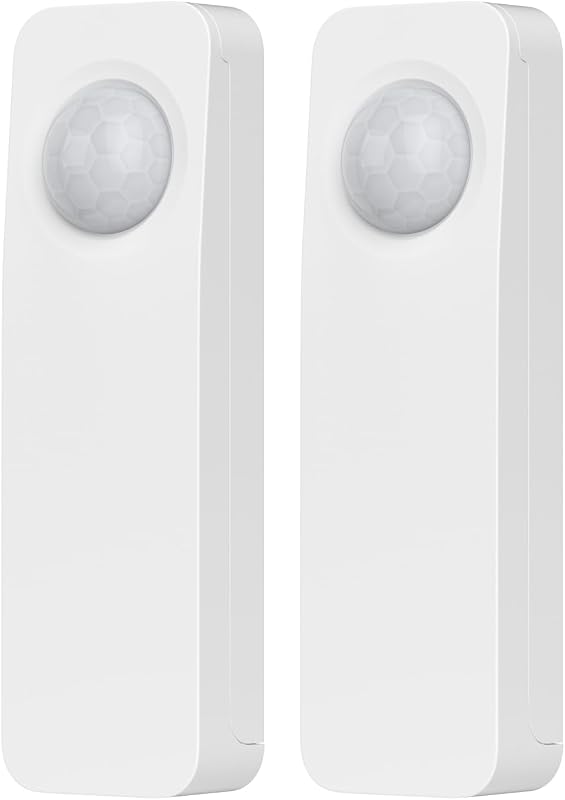
Best for: Dual entryway or staircase lighting automations
Pros
- Two-year battery life
- Up to 30-foot detection reach
- Direct Echo Zigbee hub discovery
Cons
- Fixed range without manual distance calibration
- Hallway pairs and entryways: Pick the THIRDREALITY Zigbee Motion Sensor 2 for balanced multi-door coverage.
see 1 of 6 - Whole-home lighting rollouts: Choose the THIRDREALITY Zigbee Motion Sensor 4 to equip several rooms in one project.
see 2 of 6 - Targeted single-room testing: Select the standalone THIRDREALITY Zigbee Motion Sensor for isolated closet or pantry triggers.
see 3 of 6 - Drafty rooms and custom beam zones: Deploy the THIRDREALITY Zigbee Motion Sensor R1,Adjustable Sensitivity,Real-time to tune physical detection distance manually.
see 4 of 6 - Bedrooms and child nurseries: Plug in the THIRDREALITY Multi-Function Night Light for combined motion sensing, ambient color lighting, and mesh routing.
see 5 of 6 - Desks, living rooms, and static occupancy: Install the THIRDREALITY Smart Presence Sensor R3,60GHz mmWave to detect subtle breathing movements without dropouts.
see 6 of 6
THIRDREALITY Zigbee Motion Sensor 2

Affiliate link. Price and stock live at Amazon and change there, not on this page.
THIRDREALITY Zigbee Motion Sensor 4

Affiliate link. Price and stock live at Amazon and change there, not on this page.
THIRDREALITY Zigbee Motion Sensor

Affiliate link. Price and stock live at Amazon and change there, not on this page.
THIRDREALITY Zigbee Motion Sensor R1,Adjustable Sensitivity,Real-time

Affiliate link. Price and stock live at Amazon and change there, not on this page.
THIRDREALITY Multi-Function Night Light

Affiliate link. Price and stock live at Amazon and change there, not on this page.
THIRDREALITY Smart Presence Sensor R3,60GHz mmWave

Affiliate link. Price and stock live at Amazon and change there, not on this page.
What Sets These Models Apart
Conducting a systematic thirdreality motion sensor comparison reveals clear functional boundaries across the product range. While the basic single, two-pack, and four-pack models emphasize lightweight, low-maintenance passive infrared detection with exceptional two-year battery spans, the specialty R1, Night Light, and R3 units address specific physical and environmental challenges. Understanding these architectural variations ensures you select the correct sensing technology without overcomplicating simple walk-through zones.
| Model | Detection Technology | Power Source | Maximum Range | Zigbee Mesh Role |
|---|---|---|---|---|
| THIRDREALITY Zigbee Motion Sensor 2 | Passive Infrared (PIR) | 2 AAA batteries per unit | 30 feet | End Device |
| THIRDREALITY Zigbee Motion Sensor 4 | Passive Infrared (PIR) | 2 AAA batteries per unit | 30 feet | End Device |
| THIRDREALITY Zigbee Motion Sensor | Passive Infrared (PIR) | 2 AAA batteries | 30 feet | End Device |
| THIRDREALITY Zigbee Motion Sensor R1,Adjustable Sensitivity,Real-time | PIR with Real-time Circuitry | 3 AA batteries | 10 meters | End Device |
| THIRDREALITY Multi-Function Night Light | PIR and Illumination (Lux) | Corded Electric | the listing does not specify | Router / Repeater |
| THIRDREALITY Smart Presence Sensor R3,60GHz mmWave | 60 GHz mmWave Radar and Lux | USB-C Powered (5V/1A) | 6 meters | Router / Repeater |
Deciding which thirdreality motion sensor to buy hinges directly on whether your target space involves continuous activity or stationary occupancy. Battery-operated PIR models represent the most practical solution for closets, entry doors, and corridors due to their swift response times and multi-year battery life. Conversely, stationary zones like home offices and lounges gain immense reliability from the R3 mmWave radar, while the Night Light serves double duty by illuminating dark hallways and extending your Zigbee network range to distant battery sensors.
Figures in this table are copied from the Amazon listings for these models.
Buying Tips for THIRDREALITY Zigbee Motion Sensors
Start your deployment by distinguishing between transitional motion zones and static occupancy zones. Passive infrared sensors detect rapid changes in thermal radiation caused by a warm body crossing optical segments, making them exceptionally fast and energy-efficient for hallways, staircases, and closets. However, PIR hardware cannot detect someone sitting at a desk typing or reading on a couch, which causes lighting routines to time out unexpectedly. For high-occupancy rooms, investing in a millimeter-wave presence sensor like the R3 prevents automation dropouts. If you already automate entry points using a third reality door sensor, combining that contact trigger with a responsive PIR motion sensor creates foolproof room entry and exit automations.
Consider power infrastructure and network topology when mapping sensors across your floor plan. Battery-powered sensors such as the standard PIR models and the R1 operate as Zigbee end devices, sleeping between events to preserve alkaline battery capacity over one to two years. However, a robust mesh network requires mains-powered router devices to pass signals back to your primary coordinator. While outdoor areas often rely on standalone fixtures like a wyze motion light, indoor Zigbee networks benefit greatly from strategically placing mains-powered units like the Multi-Function Night Light or the USB-C powered R3 to reinforce your wireless mesh backbone.
Evaluate hub compatibility and configuration requirements before finalizing your hardware selection. All six THIRDREALITY models communicate using standard Zigbee protocols, allowing direct local pairing with Home Assistant, Hubitat, Aeotec, and Echo devices with built-in Zigbee hubs. For SmartThings users, standard PIR sensors connect seamlessly, though advanced hardware like the Multi-Function Night Light or the R3 mmWave sensor may require loading dedicated edge drivers to expose multi-sensor features like color sliders, lux reporting, and air quality metrics.
FAQ
Do THIRDREALITY motion sensors require a proprietary bridge to work?
No proprietary bridge is mandatory for standard Zigbee operation. These sensors connect directly to standard Zigbee coordinators, including Amazon Echo smart speakers with built-in Zigbee hubs, Home Assistant using ZHA or Zigbee2MQTT, SmartThings, Aeotec, Hubitat, and Homey. THIRDREALITY does offer an optional Smart Bridge MZ1 sold separately, which adds OTA firmware updates and expands voice platform bridging to Apple HomeKit and Google Home if your central coordinator does not already handle those integrations.
What is the functional difference between PIR motion sensing and mmWave presence detection?
Passive infrared (PIR) sensors detect shifts in infrared radiation when a warm body moves across the sensor’s optical field of view. They excel at catching rapid walking movements while consuming negligible battery power, but they cannot detect stationary people. Millimeter-wave (mmWave) radar sensors emit 60 GHz high-frequency radio waves that reflect off surfaces, detecting minuscule micro-movements such as the expansion of a chest during breathing. This allows the R3 presence sensor to maintain an active occupancy state even when an occupant remains completely still.
How pet friendly are standard THIRDREALITY PIR motion sensors?
The standard THIRDREALITY PIR motion sensors feature an optical lens design intended to minimize false triggers from small domestic pets moving across the floor. By mounting the hardware at recommended wall heights and angling the detection cone slightly upward, typical cats and small dogs walking below the primary beam threshold avoid triggering lighting routines. For high-activity pet zones or larger animals, the R1 model provides manual range controls to physically restrict the detection distance and keep the coverage boundary away from pet beds or feeding areas.
Which THIRDREALITY models function as Zigbee network repeaters?
Only mains-powered models function as Zigbee routers and repeaters. The THIRDREALITY Multi-Function Night Light, which operates on corded electric power, and the THIRDREALITY Smart Presence Sensor R3, which runs on continuous USB-C power, both act as active mesh repeaters. Battery-powered models, including the standard single, two-pack, four-pack, and the R1 detector, operate strictly as low-power sleeping end devices and do not rebroadcast Zigbee signals.
Can the detection range on the THIRDREALITY R1 sensor be adjusted through software?
The detection range on the THIRDREALITY Motion Sensor R1 is adjusted manually using physical push buttons directly on the sensor housing, ranging from 1.5 meters to 9.5 meters. The product listing states that the detection range can only be adjusted manually using these simple button controls rather than through a mobile application. This hardware-first approach ensures reliable beam calibration regardless of the specific hub platform or mobile interface you use.


