Delta Table Saw Fences: Which One Fits Your Saw?
Specs below are quoted from each Amazon listing. Scores are out of 10, based on listed specifications and buyer feedback. Nothing on this page was handled or measured by us.
As Amazon Associates, we earn from qualifying purchases. This means we may receive a small commission at no extra cost to you if you click through and make a purchase.
A table saw is only as accurate as its rip fence. In woodworking shops of every scale, the delta table saw fence has long served as an industry benchmark for rigid, deflection-free ripping. When a fence flexes under lateral pressure, cuts drift off course, workpieces bind against the blade, and the risk of dangerous kickback spikes dramatically. Delta solves this problem by using a classic T-square design that locks exclusively to a front tubular guide rail, drawing the fence face perfectly parallel to the miter slot with every clamp down. If you are struggling with a factory fence that requires constant manual squaring with a tape measure, upgrading your guide setup is the single most effective hardware enhancement you can make to improve cut quality and workplace safety.
This comprehensive fitment guide examines exactly four Delta options to help you determine which configuration matches your workshop requirements. The lineup includes a complete rail-and-fence retrofit system, a bare replacement fence body designed for existing T-square rails, a dedicated commercial fence tailored for industrial cabinet saws, and a full cast-iron contractor saw that comes factory-fitted with a Biesemeyer-style assembly. These four selections differ significantly in their mounting prerequisites, included hardware, and structural profiles. By evaluating how these models differ in guide rail compatibility, locking mechanisms, and ripping capacities, you can identify the exact hardware solution needed for your bench without purchasing redundant parts or running into mounting mismatches.
Which Delta Table Saw Fences Should You Buy

Best for: Woodworkers buying a stationary saw and fence
Pros
- Factory integrated Biesemeyer-style fence
- Cast iron table top with dual wings
- Belt drive contractor grade motor
Cons
- Substantial 234-pound workshop footprint
- Stationary footprint lacks jobsite portability

Best for: Replacing worn fence bodies on existing rails
Pros
- Heavy 0.083-gauge steel body
- Eliminates handheld tape measurements
- Glides smoothly over existing Delta tubes
Cons
- Guide rails not included
- Plastic handle construction

Best for: Upgrading older saws needing complete rails
Pros
- Complete rail and guide hardware kit
- Accurate within 1/64 inch
- Thirty inch right side rip capacity
- Rigid three-point locking mechanism
Cons
- Requires assembly of front and rear rails
- Weighs 38 pounds total
- Upgrading an older open-stand or hybrid saw that lacks modern guide tubes: choose the Delta 36-T30T3 30 in. DELTA T3 Fence System with complete guide rails.
see 1 of 4 - Replacing a damaged, twisted, or dropped fence arm while keeping your existing T-square rails: choose the standalone Delta T3 Biesemeyer Fence Body.
see 2 of 4 - Restoring or upgrading an industrial cabinet saw like the 36-L352, 36-L552, or 36-L552LVC: choose the Delta Power Tools 78-919BT2 Biesemeyer Fence.
see 3 of 4 - Outfitting a new workshop with a stationary, cast-iron workstation that includes a 30-inch guide system out of the box: choose the Delta 10 in. Contractor Table Saw.
see 4 of 4
Delta 36-T30T3 30 in. DELTA T3 Fence System

Affiliate link. Price and stock live at Amazon and change there, not on this page.
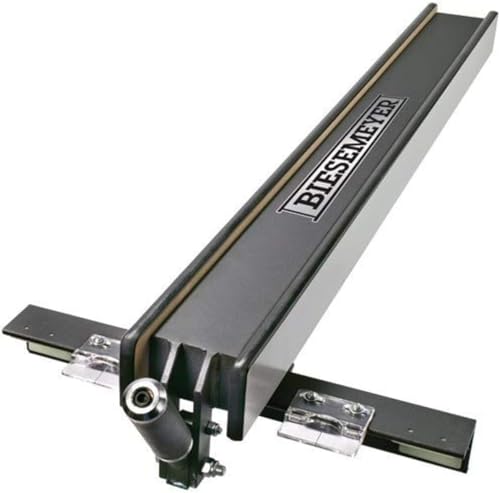
Delta T3 Biesemeyer Fence Body
Affiliate link. Price and stock live at Amazon and change there, not on this page.
Delta Power Tools 78-919BT2 Biesemeyer Fence

Affiliate link. Price and stock live at Amazon and change there, not on this page.
Delta 10 in. Contractor Table Saw

Affiliate link. Price and stock live at Amazon and change there, not on this page.
What Sets These Models Apart
Choosing the correct delta biesemeyer fence depends heavily on what equipment currently sits in your workshop. The four models reviewed here cover three completely different purchase intents: full aftermarket guide rail replacement, bare fence body replacement, and an all-in-one saw purchase. The following delta table saw fence comparison highlights how their components, dimensions, locking mechanisms, and intended saw classes compare side by side.
| Product | System Type | Rip Capacity / Dimensions | Locking System & Materials |
|---|---|---|---|
| Delta 36-T30T3 Fence System | Complete rail and fence retrofit kit | 30 in. right rip; 57-1/2 in. rail; 37 in. fence length | 3-point locking system; steel body; dual hairline pointers |
| Delta T3 Biesemeyer Fence Body | Bare replacement fence body (rails excluded) | Fits 30 in. rail setups; 44.5 in. length | 3-point locking system; 0.083-gauge steel; plastic handle |
| Delta Power Tools 78-919BT2 Biesemeyer Fence | Dedicated Type 2 Unisaw fence body | 44.75 in. length; 18.5 in. width; 6.5 in. height | Industry-best 3-point locking; metal alloy handle |
| Delta 10 in. Contractor Table Saw | Stationary 10 in. belt-drive contractor saw | 30 in. right rip; 15 in. left rip; 234 lb total weight | Integrated Biesemeyer system; cast-iron table; 1/64 in. precision |
Figures in this table are copied from the Amazon listings for these models.
Buying Tips for Delta Table Saw Fences
Before purchasing any table saw fence, verifying table dimensions and guide rail compatibility is essential. The classic Delta Biesemeyer design functions on a standard 2-inch by 2-inch square tubular steel front rail bolted to an angle iron support. If you are ordering the full delta 36-T30T3 retrofit kit, check your saw table depth from front to back. Standard contractor and hybrid cast-iron tables measure 27 inches deep. The included mounting brackets align directly with Delta bolt patterns, but if you are retrofitting another saw make, you may need to drill matching holes through your saw’s cast-iron front lip. Taking precise measurements of your table flange thickness and existing bolt spacing ensures a straightforward afternoon installation.
If you are deciding which delta table saw fence to buy as a replacement body, confirm your rail profile before ordering. The standalone Delta T3 Biesemeyer Fence Body and the industrial 78-919BT2 are fence bodies only; neither includes guide rails, front tubes, or mounting hardware. Attempting to clamp a T3 fence body onto round rails, lightweight aluminum channel extrusions, or non-standard guide tracks will fail because the front clamping pad requires a flat 2-inch rectangular face to seat properly. Furthermore, cabinet saw owners must verify their machine generation: the 78-919BT2 is engineered strictly for Type 2 Unisaws (models 36-L352, 36-L552, and 36-L552LVC) and will not bolt directly to older vintage Type 1 Unisaws without custom rail modifications.
Finally, achieving true 1/64-inch accuracy requires careful initial calibration. When bolting your front guide tube in place, use an accurate straightedge to align the tube parallel with the cast table surface. Once the rails are secured, clamp the fence body in place and measure the distance from the fence face to the front and back of a miter slot using a dial indicator or precision rule. Adjust the set screws on the fence head until the face is parallel to the miter slot, then slide the fence against a raised saw blade to align the twin hairline pointers over the zero mark on your rail scale. For clean, square joinery, pairing your dialed-in rip fence with a precision crosscut tool like the powertec table saw miter gauge guarantees square sheet goods and flawless mitered frames across every project.
FAQ
How does the Delta fence 3-point locking system work?
The Delta 3-point locking system secures the fence using two contact points on the front guide tube and one stabilization point along the rear rail. When you depress the front clamping lever, an internal cam draws the front clamping pads tightly against the face of the tubular rail. This force automatically squares the entire fence body perpendicular to the rail while simultaneously pulling the rear glide hook into position. Because all primary clamping pressure is applied at the front rail, the fence does not flex or deflect sideways when timber is pressed against it during a rip cut.
Can the Delta 36-T30T3 fence system be mounted on non-Delta saws?
Yes, but it may require drilling new mounting holes. The Delta 36-T30T3 front and rear support rails are pre-drilled to match the factory bolt spacing on standard Delta table saws with 27-inch deep cast-iron tables. If your table saw is manufactured by another brand, the front-to-back table depth must be approximately 27 inches. If the pre-drilled holes in the Delta angle irons do not align with your saw table’s existing holes, you will need to drill matching holes through the support angle irons or your saw’s cast-iron table web using high-speed steel drill bits.
Does the Delta T3 replacement fence body include guide rails?
No, the listing specifies that rails are not included with the Delta T3 Biesemeyer Fence Body. It is sold strictly as a replacement fence arm for woodworkers who already have compatible Delta 2-inch square guide tubes and support rails mounted to their saw table. If you currently have an older saw without guide tubes or with round guide bars, you should purchase the complete Delta 36-T30T3 kit instead.
Which Unisaw models fit the Delta 78-919BT2 Biesemeyer fence?
The Delta Power Tools 78-919BT2 fence is specifically designed to fit Delta Type 2 Unisaw models, including model numbers 36-L352, 36-L552, and 36-L552LVC. It is engineered with commercial-grade adjustments and a heavy-duty metal alloy clamping handle suited for industrial three-phase and single-phase cabinet saw use. It is not designed to fit portable jobsite saws or standard contractor saws without significant custom fabrication.
How do you calibrate the hairline cursor on a Delta table saw fence?
To calibrate the hairline pointer, unlock the fence and slide it toward the saw blade until the fence face gently kisses the outer teeth of the blade. Lock the fence down and verify with the saw unplugged that the teeth are just touching the fence without deflecting. Loosen the small mounting screws on the clear hairline cursor bracket, slide the hairline indicator until it aligns perfectly over the zero-inch mark on the rail scale tape, and tighten the screws back down. Verify the setting by ripping a test scrap and measuring the cut piece with a digital caliper.


