Bambu Lab 3D Printer Parts: Which Replacement or Upgrade Do You Actually Need?
6 models comparedSeptember 22, 202612 min read
Specs below are quoted from each Amazon listing. Scores are the average rating Amazon buyers left. Nothing on this page was handled or measured by us.
As Amazon Associates, we earn from qualifying purchases. This means we may receive a small commission at no extra cost to you if you click through and make a purchase.
Finding the right bambu lab parts to maintain or upgrade your 3D printer comes down to pinpointing the exact failure point or workflow bottleneck in your printing setup. Bambu Lab machines rely on integrated, precision-fit assemblies, meaning that when an extrusion block clogs, a material guide wears down, or an automated wipe arm fails, installing the proper factory-fit component restores original performance quickly. Everyday makers and production print farms need reliable bambu lab replacement parts that mount cleanly without requiring custom firmware edits or mechanical modifications.
This guide covers six distinct bambu lab parts engineered for maintenance, material handling, and thermal control across multiple printer generations. Our comparison spans multi-material routing hubs, full hotend heating block replacements, high-temperature assemblies, mechanical purge wipers, and protective silicone enclosures. While several of these selections focus on the bed-slinger A1 and A1 Mini series, others expand the multi-material capacity of enclosed CoreXY platforms like the P1 and X1 series. Reviewing compatibility, package contents, and installation requirements will help you choose which bambu lab part to buy to resolve your printer issue on the first try.
Which Bambu Lab 3D Printer Parts Should You Buy
Multi-color filament routing on A1 or A1 Mini: Bamboo Lab A1 A1 Mini AMS see 1 of 6
Expanding multi-material capacity up to 16 channels on P1 or X1 printers: for Bamboo Lab AMS Hub Connection see 2 of 6
Direct heater block restoration for standard printing on A1 series: Bamboo lab Upgraded Hotend Heating Assembly see 3 of 6
High-temperature engineering polymer extrusion up to 390°C on A1 series: Hotend Heating Assembly Up to 390℃ see 4 of 6
Automated nozzle cleaning and purge waste control on A1 series: Bamboo Original Purge Wiper & Waste
Thermal insulation and heater block protection against plastic buildup: 10Pcs Silicone Sock for Bambu Lab see 6 of 6
Affiliate link. Price and stock live at Amazon and change there, not on this page.
Best for A1 series multi-color printing setups
Pros
Connects four PTFE tubes
Direct toolhead integration
Includes installation video
Cons
Not compatible with P1 or X1 series
The Bamboo Lab A1 A1 Mini AMS five-way component is engineered specifically for owners of the A1 and A1 Mini printers who run multi-color setups. When using an automated multi-material feeder, filament strands must feed into a single entry point above the toolhead without mechanical binding. This unit functions as a 4-in-1 PTFE adapter, receiving up to four separate incoming PTFE tubes and feeding the active strand smoothly into the extruder.
Managing multi-color prints requires consistent mechanical switching so the printer can cycle filaments without manual intervention. By integrating directly with the factory toolhead assembly, this component maintains precise feeding alignment, making it an essential piece of bambu lab a1 parts maintenance when color swaps start catching. When evaluating your larger setup alongside different bamboo lab filament options, having an unobstructed path for every incoming line prevents feeder motor strain and retraction errors.
Installation is straightforward thanks to an included installation video reference and two dedicated retention buckles in the package. Weighing just 0.704 ounces, the lightweight assembly attaches securely without adding unnecessary mass to the moving printhead. While ideal for A1 and A1 Mini owners running the AMS Lite system, this five-way adapter does not fit enclosed CoreXY machines, which utilize a completely different buffer assembly.
Compatible with Bambu Lab A1 and A1 Mini 3D printers
4-in-1 PTFE adapter routes up to four filament lines into one extruder inlet
Package contains the five-way component and two mounting buckles
Lightweight 0.704-ounce build supported by an installation video tutorial
Affiliate link. Price and stock live at Amazon and change there, not on this page.
Best for P1 and X1 multi-material expansion
Pros
Supports up to 16 filament channels
Connects up to four AMS units
Includes hardware for two units
Cons
Requires extra parts for four units
PTFE length restricted to 3.5 meters
The for Bamboo Lab AMS Hub Connection is designed for owners of Bambu Lab P1P, P1S, X1, and X1C 3D printers who want to scale beyond a single automated material unit. Standard factory configurations feature a filament buffer that connects to only one four-spool feeder. By replacing that single buffer with this specialized bambu lab ams hub, your printer gains the ability to route and switch between up to four separate material units, unlocking a 16-channel feeding capacity for complex multi-material projects.
The package includes the necessary accessories and connections to hook up two material units directly to the printer. Users planning to expand to the full four-unit capacity will need to source additional accessories, specifically two 6-pin bus cables and two 2-meter lengths of PTFE tubing. When outfitting your machine with these bambu lab x1c p1s accessories, maintaining low friction along the path is essential. The listing notes that total PTFE tube runs should not exceed 3.5 meters and must avoid sharp bends to prevent mechanical resistance during rapid filament loading and retraction.
This 12.3-ounce unit manages automated spool switches reliably, increasing feeding speed across multiple units and eliminating the chore of manually reloading spools between prints. It serves as an essential upgrade for high-capacity makers running enclosed Bambu Lab platforms. However, it is exclusively engineered for the P1 and X1 chassis and cannot be mounted to A1 series bed-slinger machines.
Compatible with Bambu Lab P1P, P1S, X1, and X1C printers
Replaces the standard buffer to connect up to 4 AMS units across 16 channels
Includes hardware needed to connect two automated material units out of the box
Requires PTFE tube runs under 3.5 meters to ensure smooth filament retraction
Affiliate link. Price and stock live at Amazon and change there, not on this page.
Hotend Heating Assembly Up to 390℃
Best for High-temperature filament printing on A1
Pros
Heats up to 390 degrees Celsius
Includes 90W thermistor and silicone base
Reinforced wear-resistant construction
Cons
More complex than basic PLA needs
Best for Everyday A1 series hotend maintenance
Pros
Complete heating block assembly
Consistent heat distribution
Tool-friendly direct replacement
Cons
Listing does not specify maximum temperature
The Bamboo lab Upgraded Hotend Heating Assembly serves as a complete, direct replacement heating block designed specifically for Bambu Lab A1 and A1 Mini printers. Rather than requiring users to solder delicate wires or replace individual heating elements, this product arrives as a cohesive hotend assembly. For anyone troubleshooting thermal errors, unstable temperatures, or a clogged heater block resulting from failed prints, this assembly restores factory-level extrusion performance without modifying your printer.
A primary benefit of this assembly is its optimized heat transfer design. The upgraded heating block provides efficient and consistent heat distribution, helping prevent cold zones inside the melt chamber during long print jobs. When working with everyday materials such as bambu lab pla, stable temperature delivery ensures uniform layer bonding and eliminates flow-related surface artifacts caused by fluctuating heater temperatures.
Replacing a worn component is straightforward using standard tools, making this bambu lab a1 mini hotend replacement accessible for beginners and experienced print technicians alike. Weighing 1.13 ounces, it matches factory weight profiles to keep printhead inertia balanced. While suitable for regular daily maintenance, creators needing to print specialized high-temperature filaments may require an assembly explicitly rated for extreme heat.
Precision-built for Bambu Lab A1 and A1 Mini 3D printers
Complete hotend heating block assembly rather than a bare nozzle
Optimized heating block delivers consistent thermal distribution across long jobs
Tool-friendly installation without permanent machine or firmware adjustments
Affiliate link. Price and stock live at Amazon and change there, not on this page.
The Hotend Heating Assembly Up to 390℃ is an advanced thermal replacement kit built specifically for Bambu Lab A1 series printers. Engineered to operate well beyond standard temperature limits, this assembly supports temperatures up to 390°C. This makes it suitable for running high-temperature engineering filaments like nylon and specialized PETG blends that demand elevated melt chamber heat.
Constructed with thickened, reinforced materials, this assembly resists wear and thermal aging under continuous high-temperature duty cycles. The kit comes complete with a 90W thermistor, heating wire, heat-insulating silicone base, hot end metal clip, and fixing screw. An integrated thermistor monitors heat in real time, stabilizing extrusion across changing ambient room conditions and extending operational lifespan in high-frequency production setups.
For makers conducting a thorough bambu lab parts comparison, this hotend heating assembly 390c option provides the extended thermal ceiling required for demanding engineering filaments. Weighing 1.06 ounces, it mounts securely to the A1 printhead without adding excess drag. However, hobbyists who exclusively print standard, low-temperature materials will find a standard replacement assembly more than sufficient for their daily needs.
Supports high-temperature printing materials up to 390 degrees Celsius
Complete kit includes 90W thermistor, heating wire, silicone base, clip, and screw
Thickened, reinforced construction built for industrial and high-frequency use
Real-time temperature monitoring ensures stable extrusion with nylon and PETG
Affiliate link. Price and stock live at Amazon and change there, not on this page.
Best for Automated nozzle cleaning on A1 printers
Pros
Reduces post-print cleanup by 90%
Heat-resistant POM and stainless steel
Includes mounting screw
Cons
Fits A1 and A1 Mini only
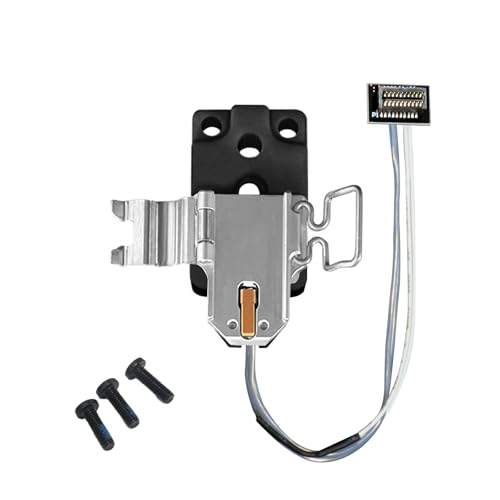
The Bamboo Original Purge Wiper & Waste dispenser is an essential automated cleaning component engineered exclusively for Bambu Lab A1 and A1 Mini 3D printers. During start routines, filament swaps, and pause-resume sequences, the toolhead purges excess melted plastic. This dedicated wiper collects and dispenses that waste material into the proper drop zone, preventing molten plastic residue from sticking to the nozzle tip or dragging onto the print bed.
Constructed from heat-resistant POM plastic and stainless steel hardware, this bambu lab purge wiper withstands repeated mechanical contact and high operating temperatures. Automating the waste collection sequence reduces manual scraping and bed cleaning by 90%, keeping the build surface clear. This protects print adhesion on your textured bambu lab plate and prevents loose plastic debris from causing layer collisions.
The package contains one complete purge wiper assembly along with its matching mounting screw. Installation requires no complicated modifications, allowing you to swap out a bent, worn, or missing wiper arm in minutes. Because this mechanism is built specifically for the open-frame A1 series purge path, it cannot be adapted to enclosed P1 or X1 series machines.
Designed exclusively for Bambu Lab A1 and A1 Mini 3D printers
Durable construction utilizing heat-resistant POM plastic and stainless steel
Reduces post-print cleanup by 90% via automated nozzle wiping
Includes one complete purge wiper unit and one installation screw
Affiliate link. Price and stock live at Amazon and change there, not on this page.
Best for Budget thermal protection in bulk
Pros
10 pieces included in pack
Tool-free slip-on installation
Insulates block against cooling fans
Cons
Not compatible with P1 or X1 blocks
The 10Pcs Silicone Sock for Bambu Lab pack provides crucial thermal insulation and exterior protection for Bambu Lab A1 and A1 Mini heater blocks. These flexible silicone boots slide directly over the heating block, shielding the melt zone from external cooling fan drafts while retaining thermal energy inside the block. They also provide a protective physical barrier that reduces the risk of accidental contact burns during hotend maintenance.
Thermal stability is vital for consistent layer deposition, especially when part cooling fans ramp up to maximum speed during rapid overhang printing. By insulating the heater block, each silicone sock bambu lab a1 cover ensures the heating element maintains set temperatures without overworking the power delivery system. Furthermore, the non-stick surface prevents stray melted filament from adhering to the metal heater block and damaging thermistor wiring.
Supplied as a 10-piece pack, this set ensures long-term maintenance readiness for high-output workshops. The stretchy silicone material allows quick, tool-free installation in seconds without disassembling the printhead assembly. Keep in mind that these covers are molded to fit the specific footprint of the A1 series hotend and will not fit the heating blocks on P1 or X1 series machines.
Figures in this table are copied from the Amazon listings for these models.
Buying Tips for Bambu Lab 3D Printer Parts
The most important step when shopping for replacement hardware is confirming chassis compatibility before purchasing. Bambu Lab divides its consumer lineup into distinct mechanical architectures: open-frame bed-slingers like the A1 and A1 Mini, and enclosed CoreXY machines like the P1P, P1S, X1, and X1C. Upgrades like the AMS Hub connection are built exclusively for enclosed CoreXY electronics, whereas items like the five-way filament adapter, purge wipers, and quick-swap hotend assemblies belong strictly to the A1 series.
It is equally useful to separate routine preventative maintenance consumables from structural repairs. Silicone hotend covers and mechanical purge wipers experience continuous heat and physical contact, making them wearable components that benefit from being kept on hand in your workshop. In contrast, full hotend heating assemblies and multi-spool hubs are targeted problem solvers designed to replace damaged electrical assemblies or substantially expand your printer’s material switching capabilities.
Finally, consider the thermal requirements of your intended printing materials. If your projects rely primarily on standard polymers, a direct-replacement heating assembly provides straightforward reliability. If your workflow requires engineering polymers like nylon, investing in a high-temperature assembly rated to 390°C ensures consistent thermal regulation. Matching specific component ratings to the capabilities of your bambu lab 3d printer prevents premature hardware failure and preserves print quality.
FAQ
How often should silicone socks be replaced on a 3D printer hotend?
Silicone socks should be replaced whenever the material tears, loses its snug fit, or becomes coated in baked-on filament debris. Maintaining an intact cover ensures effective thermal insulation against high-speed part cooling fans and prevents stray plastic from sticking directly to heater block wiring.
Can the Bambu Lab AMS Hub be used on the A1 or A1 Mini?
No, the Bambu Lab AMS Hub is engineered exclusively for the P1 and X1 series enclosed CoreXY printers. The A1 and A1 Mini utilize a different filament management design powered by the AMS Lite system, which relies on a five-way filament hub mounted above the toolhead.
What is the difference between a bare nozzle and a complete hotend heating assembly?
A bare nozzle is simply the threaded or push-fit tip through which plastic extrudes, whereas a complete hotend heating assembly includes the heating block, internal ceramic heating element, thermistor wiring, and mounting hardware. Replacing the full assembly resolves electrical faults and deep melt zone clogs that a nozzle swap alone cannot fix.
What happens if PTFE tube runs exceed 3.5 meters on the AMS Hub?
When PTFE tubing between the feeder units and the hub exceeds 3.5 meters, mechanical friction increases significantly along the filament path. This extra resistance can cause motor slipping, failed filament retractions, and loading errors during automated multi-material color changes.
How does the purge wiper prevent print failures on the A1 series?
The purge wiper cleans molten plastic remnants from the nozzle tip during start routines, material swaps, and pause sequences. By catching and deflecting purged filament into a waste receptacle, it prevents loose plastic blobs from dragging across the build plate and colliding with your printed model.